Integrating House Home Recycle Logo Vector Design into Sustainable Branding Workflows
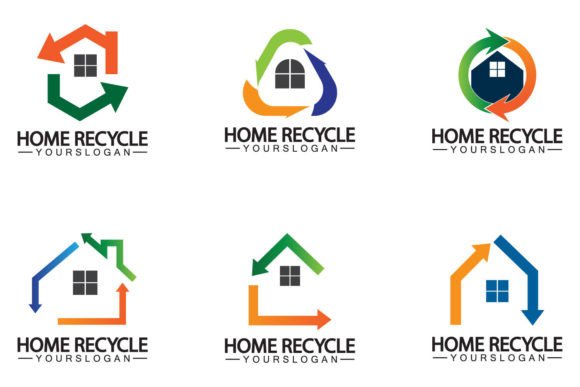
In the modern digital landscape, visual identity is not merely an aesthetic choice but a strategic asset. For businesses and creators focused on sustainability, real estate, or eco-friendly construction, the House Home Recycle Logo Vector Design serves as a critical component of brand communication. This specific type of illustration combines architectural elements with ecological symbols, creating a immediate visual association between shelter and environmental responsibility. Understanding how to effectively integrate this design asset into your broader workflow can significantly enhance project efficiency, brand consistency, and audience engagement.
The core value of using a vector-based logo design lies in its scalability and adaptability. Unlike raster images, which lose quality when resized, vector graphics maintain crisp edges and clarity at any dimension. This technical characteristic makes the house home recycle logo ideal for diverse applications, from tiny favicon icons on a website to large-format signage on construction sites. By incorporating this asset early in your planning phase, you ensure that your visual messaging remains consistent across all touchpoints, reinforcing your commitment to green building practices and ecological conservation.
Strategic Placement in the Creative Process
Implementing a House Home Recycle Logo Vector Design requires more than simply dropping an image into a document. It demands a thoughtful approach to where and how the symbol appears within your project lifecycle. Whether you are launching a new sustainable housing development, rebranding an existing property management firm, or creating educational content about energy conservation, the timing of your design integration matters.
Pre-Project Planning and Conceptualization
Before finalizing marketing materials or architectural renderings, use the logo concept to define your brand’s visual language. The combination of a house structure with organic elements like leaves, trees, or recycling arrows establishes a narrative of harmony between human habitation and nature. During this stage, collaborate with designers to customize the vector file. Adjust the color palette to align with your brand guidelines—often utilizing shades of green to signify nature, blue for water and clean energy, or earth tones for organic construction materials. This preparation ensures that the logo does not feel like an afterthought but rather the cornerstone of your visual identity.
During Execution and Asset Creation
As you move into the production phase, the vector format becomes indispensable. You will likely need to generate a wide array of assets: business cards, letterheads, social media profiles, website headers, and promotional brochures. Because the House Home Recycle Logo Vector Design is built on mathematical paths rather than pixels, you can scale it infinitely without degradation. This flexibility allows your team to work faster, reducing the time spent resizing or recreating logos for different platforms. Furthermore, the isolated nature of the design on a white background makes it easy to overlay onto various textures, such as wood grain, concrete, or foliage photography, enhancing the contextual relevance of your marketing materials.
Enhancing Workflow Efficiency with Vector Assets
One of the most practical benefits of utilizing high-quality vector illustrations is the improvement of operational efficiency. In a typical creative workflow, designers often spend hours troubleshooting resolution issues or attempting to trace low-quality images. By starting with a professional vector design, you eliminate these bottlenecks. The clean lines and simple geometry of the house and leaf symbols ensure that the logo remains legible even at small sizes, such as on mobile screens or printed receipts.
Compatibility and File Management
Vector files, typically saved in formats like SVG, AI, or EPS, are compatible with most industry-standard design software. This interoperability facilitates smoother collaboration among team members. For instance, a web developer can embed the SVG code directly into a website’s HTML, ensuring fast load times and sharp display on retina screens. Meanwhile, a print specialist can use the same source file to produce high-resolution banners for trade shows or community events. Organizing these files in a centralized digital asset management system allows for quick retrieval and version control, preventing the use of outdated or incorrect logo variations.
Consistency Across Channels
Maintaining brand consistency is crucial for building trust with your audience. When your House Home Recycle Logo Vector Design appears identical on your Instagram profile, your official website, and your physical office signage, it reinforces professional reliability. The abstract yet recognizable nature of the icon—merging the concept of a building with the symbol of recycling—creates a memorable visual shorthand. This consistency helps stakeholders instantly recognize your commitment to environmental protection and sustainable architecture, regardless of where they encounter your brand.
Practical Applications and Use Cases
The versatility of this design extends beyond traditional corporate branding. Its symbolic representation of ecology, energy, and construction makes it suitable for a variety of sectors and initiatives. Below are several practical scenarios where integrating this logo can add significant value.
- Real Estate and Property Development: Use the logo to highlight eco-friendly features of new housing estates. It signals to potential buyers that the property incorporates energy-efficient systems, sustainable materials, and green landscaping.
- Construction and Renovation Services: Contractors specializing in green building can display the icon on uniforms, vehicles, and site barriers. This visual cue communicates adherence to environmental regulations and responsible waste management practices.
- Educational Campaigns: NGOs and educational institutions focused on conservation can utilize the illustration in workshops, posters, and digital content. The simple, clean design appeals to a broad audience, making complex concepts like carbon footprint reduction more accessible.
- Product Packaging: For companies selling home goods, solar panels, or water filtration systems, the logo serves as a seal of approval. It suggests that the product aligns with principles of sustainability and natural living.
Each of these applications leverages the symbolic power of the design. The fusion of the house structure with natural elements like flowers, leaves, or the sun creates an emotional connection with viewers who prioritize ethical consumption and environmental stewardship.
Quality Control and Long-Term Usability
To maximize the return on investment for your design assets, rigorous quality control is essential. When selecting or customizing a House Home Recycle Logo Vector Design, pay attention to the balance between simplicity and detail. An overly complex logo may lose its impact when scaled down, while a too-simple design might fail to convey the nuanced message of ecological integration. Ensure that the lines are smooth, the curves are balanced, and the spacing between elements is consistent.
Adaptability for Future Trends
Sustainability trends evolve rapidly. Today’s focus might be on solar energy and water conservation, while tomorrow’s emphasis could shift toward biodiversity and forest preservation. A well-designed vector logo possesses enough abstract quality to remain relevant amidst these shifts. By keeping the core elements—house, leaf, recycle symbol—clean and distinct, you allow for minor adjustments in color or accompanying text without needing a complete redesign. This longevity reduces long-term costs and maintains brand recognition over time.
Integration with Digital Platforms
In the digital realm, performance matters. Optimize your vector files for web use by minimizing file size without compromising quality. Use CSS to control colors if possible, allowing for easy theme changes (such as switching to a dark mode interface). Ensure that the logo retains its clarity on various devices, from smartphones to large desktop monitors. Testing the visibility of the icon against different backgrounds—white, dark, or textured—ensures that it remains effective in all user interfaces.
Conclusion: Building a Cohesive Green Identity
The House Home Recycle Logo Vector Design is more than a graphic element; it is a strategic tool for communicating values. By integrating this asset thoughtfully into your workflow, you streamline production, enhance brand consistency, and clearly articulate your commitment to the environment. Whether you are an architect, a marketer, or a small business owner, leveraging the scalability and symbolic power of vector graphics allows you to create a lasting impression. Focus on preparation, compatibility, and quality control to ensure that your visual identity supports your broader goals of sustainability and ecological responsibility. In doing so, you not only improve your operational efficiency but also contribute to a clearer, more compelling narrative about the future of living in harmony with nature.